


For rural riding, pay attention to how a bike handles bumps, slow turns and hours in the saddle. The right features help you manage these conditions, whether you commute between villages or take longer trips through the countryside.
Table of Contents
Start With the Roads You Actually Use
Think about your usual journey before studying engine sizes. A daily ride on patched roads needs different priorities from a weekend route with steep climbs and rocky tracks.
Ask yourself three questions:
- How much of your route has loose surfaces or deep potholes?
- Will you regularly carry a pillion or luggage?
- How far must you travel between fuel stops?
Your answers give you a useful starting point. Choose features for the roads you ride most often, while allowing for occasional difficult stretches.
Understand Suspension Travel and Ground Clearance
Suspension allows the wheels to move over bumps while reducing the shocks reaching you. Suspension travel is the distance the wheel can move through that system. More travel provides room to absorb larger bumps, but the suspension must also suit your weight and load.
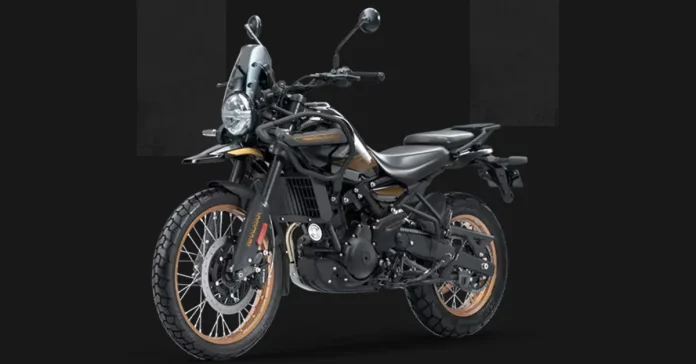
The Royal Enfield Himalayan 450 offers 200 mm of front and rear suspension travel, alongside 230 mm of ground clearance. These specifications are relevant when your route includes frequent rough sections.
Ground clearance is the space beneath the motorcycle. It helps reduce the chance of the underside hitting raised stones or uneven tracks. However, added luggage compresses the suspension, reducing available clearance. Slow down before obstacles rather than relying on the specification alone.
Avoid riding through water when you cannot judge its depth, the road underneath or the strength of the flow across it.
Check Seat Height and Manageability
A tall motorcycle can become awkward when you stop beside a sloping road or reverse out of a muddy parking space. Check how confidently you can place a foot on the ground and support the bike.
For riders concerned about reaching the ground, the Scram 440 has a seat height of 795 mm and ground clearance of 200 mm. Those figures provide a starting point for assessing fit; seat width and your leg length matter too.
Before deciding, try these checks:
- Push the motorcycle backwards with the engine off.
- Practise a slow turn in a clear, permitted area.
- Lift it off the side stand without straining.
Remember that a lower seat does not automatically mean a lighter motorcycle.
Choose Tyres for Mixed Surfaces
Rural routes often combine tarmac, sand, gravel and wet soil. Tyres designed for mixed surfaces can offer a useful compromise, though no tread pattern grips equally well everywhere.
Check the tyre type fitted to the exact variant. Alloy wheel versions of the Scram model have tubeless tyres, while spoke wheel versions use tubes. A small puncture in a tubeless tyre can sometimes be repaired with a plug; tube repairs usually require removing the wheel or tyre.
Carry suitable repair equipment and learn its limits. Use the recommended tyre pressures for your load. Avoid reducing pressure casually, because it can affect handling and increase the risk of tyre or rim damage.
Look for Predictable Engine Response
You need steady pulling power to climb an incline, move past a tractor safely or ride with luggage. Torque describes the engine’s turning force, but a number on a brochure cannot tell you how comfortable the motorcycle feels.
During a test ride, notice whether small throttle movements produce smooth responses. Check that the clutch feels manageable when moving slowly. An engine that struggles in a high gear needs a downshift; forcing it to pull can cause jerking.
On longer roads, assess vibration at sensible cruising speeds. Leave enough room for safe overtaking, and never assume a larger engine makes every overtaking opportunity suitable.
Assess Comfort Beyond the Seat
A soft seat may feel pleasant in a showroom yet become uncomfortable after an hour. Your riding position matters just as much.
Check Your Posture
Your shoulders should feel relaxed, your elbows slightly bent, and your knees comfortably positioned. You should reach the controls without stretching. Wear your usual riding footwear when checking the fit.
Check Wind Exposure
A windscreen can reduce the effort of riding into the wind. Its height and shape matter, because turbulent air around your helmet can become tiring. Test the setup if possible, and plan regular breaks regardless of the motorcycle’s comfort features.
Make Braking and Visibility a Priority
Loose stones, livestock and vehicles emerging from side lanes demand attention. Brakes should respond progressively, allowing you to increase braking force smoothly.
Dual-channel ABS helps reduce wheel locking during hard braking. It does not guarantee a shorter stop on every surface. Keep ABS enabled for ordinary road riding and maintain extra space on gravel or wet roads.
Check mirror visibility and headlamp alignment. Plan unfamiliar rural stretches in daylight where possible. Poor lighting and unmarked obstacles can make night riding much harder, even with a bright headlamp.
Plan for Fuel, Luggage and Maintenance
Tank capacity only tells part of the story. Actual range changes with speed, load and terrain, so identify fuel stops before entering remote areas.
- Secure luggage away from the exhaust, wheels and chain.
- Follow the motorcycle’s load limits and luggage rack instructions.
- Check oil, tyres, brakes and chain condition before departure.
- Confirm where authorised servicing and suitable spare parts are available.
Conclusion
Choose a rural motorcycle by testing how it fits your body, route and routine. Useful suspension, suitable tyres and comfortable controls deserve as much attention as engine capacity. Take a proper test ride, budget for riding gear and leave room for maintenance costs. A bike you can handle confidently will make everyday journeys and longer countryside rides easier to enjoy.